Warn at-risk patients before the heat.

Hello Mrs Fischer,The weather service has issued a warning of severe heat for tomorrow. Drink enough (your doctor's instructions still apply), stay somewhere cool and avoid exertion.With heart failure, heat puts strain on the circulation, and your water tablets can increase fluid loss.Important: don't change any medication or doctor's instructions (e.g. on how much to drink) without talking to us first.Your practice Dr. Weber.
- 1When a heat warning is issued, Monenda automatically lists your at-risk patients, using established clinical criteria.
- 2You review the list and approve it.
- 3Each patient receives a personal text message in your practice's name.
Why does heat protection matter so much?
- 5×
- as many days with a high ≥ 30 °C as the 1961–1990 average
- ≈ 16,000
- heat deaths in Germany in summer 2026
Most heat deaths are preventable.
People at risk often don't see themselves as at risk.
People at risk need a warning that speaks to them personally.
With Monenda, it comes from their own GP practice, with the reason.
18.8% → 7.9% heat stress in older people after targeted advice by letter (randomised trial). Our pilot tests this for messages from the practice.
What this looks like in your practice
DWD Open Data · RKI, weekly heat mortality report · Hot days: daily maximum ≥ 30 °C, averaged over Germany, 2026 provisional. Heat deaths: RKI estimates (Winklmayr et al. 2022; Epid. Bull. 19/2025); 2026: range 14,400–17,600, as of week 37/2026, final weekly report. · WHO Europe, statement by H. Kluge, 11 June 2026 · PACE study, University of Erfurt, 2023 · Abrahamson et al., J Public Health 2009 · Nitschke et al., IJERPH 2017 (RCT, South Australia, n = 637, age ≥ 65)
What Monenda looks like in your practice.
Before a heatwave, Monenda puts a ready list in front of you. Your team reviews it and approves it in one go.
| Patient | Date of birth | Criteria met | Text | |
|---|---|---|---|---|
| FISCHER, Erika | 14.03.1945(81) | Age ≥ 75Heart failure(I50)Diuretics(C03) | ||
| SCHULZ, Karl | 02.11.1935(90) | Age ≥ 75 | ||
| WAGNER, Ingrid | 21.06.1949(77) | Age ≥ 75Type 2 diabetes(E11)Insulin(A10A) | ||
| BECKER, Hans | 09.01.1942(84) | Age ≥ 75COPD(J44) | ||
| HOFFMANN, Renate | 30.09.1952(73) | Hypertension(I10)Beta blockers(C07) | ||
| KRAUSE, Gerda | 08.08.1940(85) | Age ≥ 75Chronic kidney disease(N18) | ||
| MEYER, Walter | 17.04.1938(88) | Age ≥ 75Coronary heart disease(I25)Calcium channel blockers(C08) | ||
| SCHMIDT, Helga | 25.12.1944(81) | Age ≥ 75Hypertension(I10)ACE inhibitors/AT1 blockers(C09) | ||
| KOCH, Friedrich | 03.05.1936(90) | Age ≥ 75Diuretics(C03) | ||
| RICHTER, Ursula | 11.10.1947(78) | Age ≥ 75Asthma(J45) |
Example view with sample data
What's in it for your practice?What's in it for your practice?
- What the GP association recommends, done: identify vulnerable patients in advance and contact them when heat comes.
- Prepared, not caught out: the 2015 heatwave brought about 40% more doctor contacts.
- Your voice when it's hot: people at risk mostly hear about heat from the media, only 4% from their doctor.
- Less manual work: no lists by hand, no phone chains.
In Baden-Württemberg, several GP contracts already pay for climate-resilient care.
Safety and data protection
- Patient records stay in the practice
- Every message needs your approval
- Hosted in the EU
German GP association (Hausärzteverband), heat manual 2023 · Schillo, Richter, Wasem: effect of heat on morbidity, IBES 229 for the Federal Ministry of Health, 2019 (AOK Rheinland/Hamburg, 2015 heatwave) · PACE study, University of Erfurt, July 2023 · GP contracts in Baden-Württemberg (AOK, GWQ, Bosch BKK, BKK LV Süd), fee annexes 2025/2026
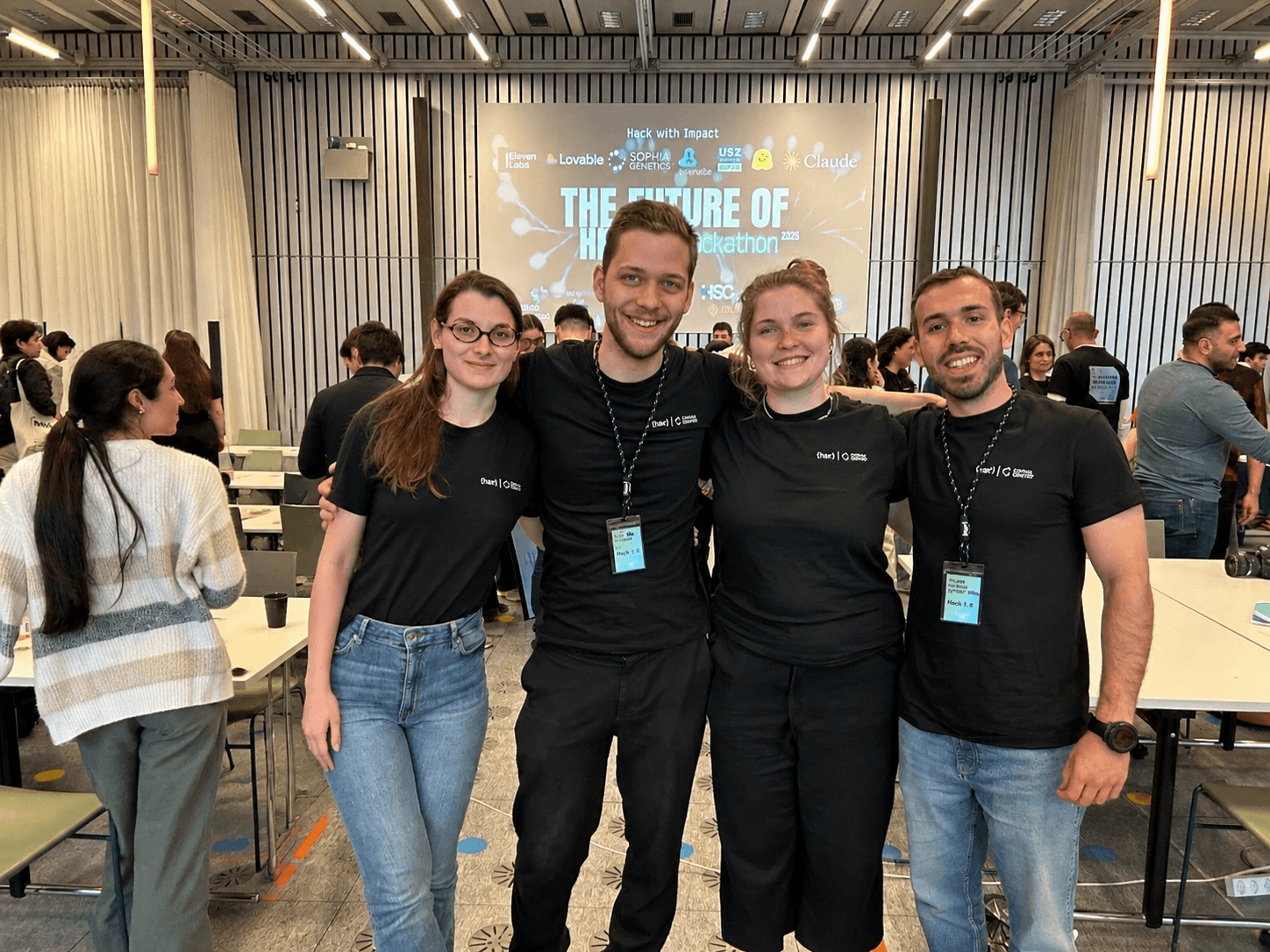
After 48 hours of building at the Future of Health Hackathon, ETH Zürich
Marta
Bolognini
Paul
Johannssen
Annalena
Lange
Gaspar
Astorga Palma
Missing from the picture? Get in touch at join.monenda.org
The team
A doctor, two PhD researchers, AI and finance expertise
Led by a doctor.
From Spain, Italy and Germany.
- Marta Bolognini, MD · Doctor, AI in medicine (UniSR Milan)
- Paul Johannssen, MSc · Data engineer, PhD candidate
- Annalena Lange, MSc · Machine learning engineer
- Gaspar Astorga Palma, MSc · AI project manager, formerly a financial auditor
- Experience: economic analyses, KPMG, EY, VW
Contact
Piloting, funding, or building with us? Let's talk.
Pilot partners
Municipalities, public health offices and GP networks, ideally in NRW.
Pre-seed funding
To bring the prototype into practices and build the quality system.
Insurers and regulatory advice
Contacts at statutory health insurers, and experience with medical-device approval.
Co-founders
Software developers in the Bonn region. join.monenda.org
Contact
Paul Johannssen
CTO
For partners & investors
Roadmap
From prototype to medical device
- Now – end of 2026
Prototype and quality system
Develop the prototype further and set up quality management to ISO 13485. Bring Monenda into the heat action plans that NRW municipalities are writing for 2026–2027.
- Summer 2027
Study with five practices
A retrospective study with five GP practices in an NRW municipality: does Monenda flag the same patients the practice considers at risk from heat, and where does it differ? In parallel, clarify the device classification with the BfArM.
- After the study
Pre-seed round
Financing built on the prototype, the quality system and the study results, alongside public funding such as the G-BA Innovationsfonds.
- 2028
Medical-device conformity assessment
Conformity assessment under the EU MDR. We will clarify the risk class with the BfArM beforehand.
- 2029
Market entry
Annual licences for GP practices, with statutory health insurers as the main intended payer.